How to Get Rid of Toenail Fungus Naturally: What Actually Works (and What's a Waste of Time)
Vinegar, tea tree oil, prescription pills, topical pens and sprays. Here's an honest, evidence-based look at what actually works for toenail fungus, and what's mostly folklore.
Quick answer: how to get rid of toenail fungus naturally
If you're trying to figure out how to get rid of toenail fungus naturally, the honest first fact is this: there's no way to clear it overnight, nails grow too slowly for that, no matter what a product claims. The realistic options fall into three categories: home remedies (weak evidence, very slow, essentially free), prescription oral antifungals (the most clinically effective option, but with real side-effect risks), and topical antifungal treatments formulated to penetrate the nail (a middle ground, slower than oral medication, but avoiding the systemic risk). Which one makes sense depends on how mild the infection is and how much risk you're willing to take on.
Put another way, if what you're really asking is how to kill toenail fungus: killing the fungus is the easy part, reaching it through hard keratin is the hard part. That's why the delivery format of a toenail fungus treatment matters as much as the active ingredient inside it, and why every honest answer here is measured in months rather than days.
Do Toenail Fungus Home Remedies Actually Work?
Most kitchen-cabinet remedies for toenail fungus, things like vinegar soaks, baking soda and garlic, have weak scientific support and work slowly, if at all. Tea tree oil is the exception with real documented antifungal properties, but applied alone it struggles to penetrate a thick, infected nail plate.
It's worth saying plainly: most kitchen-cabinet remedies for nail fungus have weak scientific support. That doesn't mean people imagining results, some do see improvement, but the mechanism is often unproven, and the timeline is long even when it helps.
- Apple cider vinegar soaks. Commonly recommended, but there's little direct evidence it kills the fungus causing onychomycosis, it may help keep the area less hospitable to fungal growth as a supporting habit, not a treatment on its own.
- Baking soda paste. Doesn't kill fungus directly; at best it may slow growth by changing the local pH.
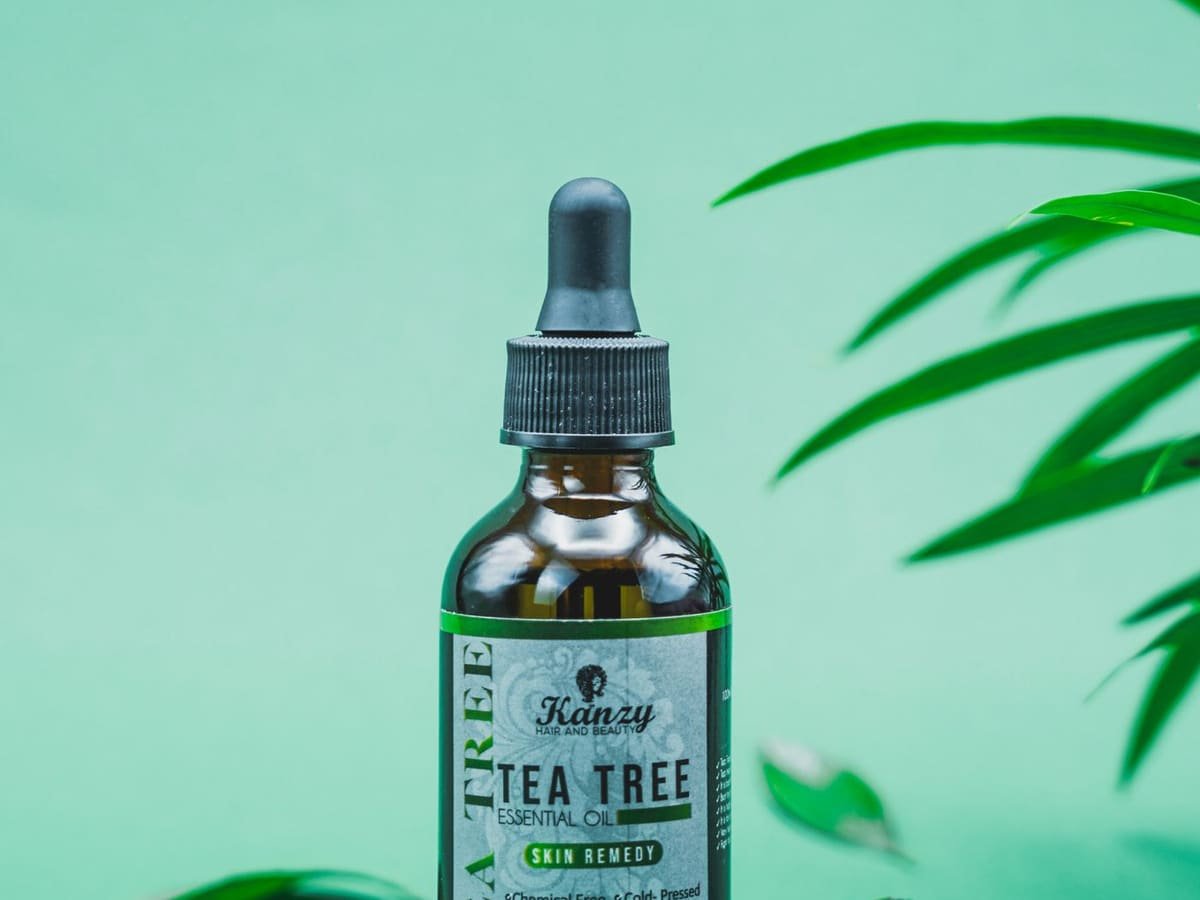
- Tea tree oil. This one has more going for it, it has documented antifungal and antibacterial properties and is genuinely used in some formulated antifungal products, not just as a folk remedy. Applied alone, though, it doesn't penetrate a thick nail plate well.
- Garlic. Some lab research suggests antifungal potential, but there's no solid clinical evidence it works applied topically to an infected nail.
The honest takeaway: these can be reasonable supporting habits for very mild, early-stage discoloration, but none of them is a reliable, stand-alone natural antifungal treatment for nails once an infection is actually established.
Should You Just Take an Oral Antifungal Pill for Toenail Fungus?
Oral antifungals like terbinafine are the most clinically effective treatment for toenail fungus because they reach the nail bed through the bloodstream. But they carry real risks: NIH's LiverTox database estimates serious liver injury occurs in roughly 1 in 2,500 to 1 in 25,000 people treated, which is why doctors test liver function before and during treatment.
Oral antifungals like terbinafine are the treatment doctors reach for first because they're the most effective option in clinical terms, the medication reaches the nail bed through the bloodstream instead of trying to soak through the nail from outside.
The trade-off is real, though: oral antifungals can cause headaches, gastrointestinal symptoms, rash, and in some cases affect the liver, which is why doctors typically run bloodwork before and during treatment. The American Academy of Dermatology confirms this pattern: liver function is tested before starting oral treatment and rechecked a few weeks in. Serious liver injury from terbinafine is well documented but rare, NIH's LiverTox database puts the estimate at roughly 1 in 2,500 to 1 in 25,000 people treated.
For a lot of people, especially with a single mild-to-moderate affected nail and no underlying health condition, that's a lot of systemic risk to take on before trying anything else.
What's the Middle-Ground Treatment Between Home Remedies and Oral Pills?
Newer topical treatments, usually applied with a pen or brush-tip applicator, combine antifungal ingredients like tea tree oil with delivery systems designed to actually penetrate the nail plate. That makes them a middle ground: more effective than weak home remedies, and lower-risk than oral medication.
This is where a real gap exists. Traditional topical treatments (including some prescription nail lacquers) have historically had low cure rates for one simple reason: the nail plate is hard and doesn't let much through. A treatment can be perfectly antifungal in a lab dish and still fail in real life if it can't get past the nail surface to where the fungus actually lives.
That's the specific problem that newer topical formulas, usually applied with a brush-tip or pen-style applicator for precise, mess-free coverage, are designed to solve: combining antifungal ingredients (tea tree oil is a common one) with delivery systems intended to carry the formula deeper into the nail, rather than just sitting on top of it.
A 2024 lab study on tea tree oil and onychomycosis-causing dermatophytes, published via NCBI, confirms the antifungal activity but flags the same limitation this article keeps coming back to: the tough, keratin structure of an infected nail is genuinely hard for any antifungal to penetrate, which is exactly why the delivery system matters as much as the active ingredient itself. If you've already tried tea tree oil or another home remedy and your toenail fungus won't go away after a few months, that's usually less about the ingredient not working and more about it never reaching the fungus in the first place.
It's still a topical, so it's still slower than oral medication and depends on consistent twice-daily use over months, nails only look normal again once new, clear nail fully grows out. But it avoids the systemic side-effect profile of oral drugs, which is exactly why it's become the most searched middle-ground option over the last couple of years.
So What's the Best Way to Treat Toenail Fungus at Home?
The safest at-home approach: confirm it's actually fungus, use a well-formulated topical antifungal consistently if it's mild, see a doctor about oral treatment if it's severe or you have diabetes, and be patient, because nails take months to grow out regardless of the treatment used.
In more detail, here's a reasonable, low-risk order of operations for treating toenail fungus naturally before escalating to a doctor:
- Confirm it's actually fungus, see our guide on identifying a yellow, thickening toenail if you haven't already.
- If it's mild and caught early, a well-formulated topical antifungal, applied consistently, is a sensible first step, lower risk than oral medication, more targeted than a vinegar soak.
- If it's severe, spreading fast, or you have diabetes or a weakened immune system, talk to a doctor about oral treatment rather than relying on topicals alone.
- Either way, be consistent and patient. Nails grow slowly. Judging a treatment after two weeks, of any kind, isn't a fair test.
| Approach | Effectiveness | Speed | Risk |
|---|---|---|---|
| Home remedies (vinegar, tea tree oil alone, garlic) | Weak evidence, mostly supportive | Slow, if at all | Very low |
| Oral prescription antifungals | Most clinically effective | Reaches the root fastest, new nail still takes months to grow in | Systemic, requires liver monitoring |
| Topical treatments built for nail penetration | Moderate, depends on the formula | Slower than oral, faster than raw home remedies alone | Low, localized |
Spray, Pen or Oil: Which Toenail Fungus Treatment Format Is Best?
Short answer: the format mostly decides how much product actually reaches the nail and how easy the routine is to keep up. A toenail fungus spray covers awkward angles and holds far more product per bottle; pens are precise but tiny; oils sit somewhere in between. Whichever you pick, check three things: whether tea tree oil or a comparable studied active is a meaningful part of the formula, how much product you get per bottle relative to twice-daily use, and whether there's a real refund policy if it doesn't work for you.
The category has a genuine reputation problem: a lot of products ship tiny 3 ml bottles at a premium price and quietly expect you to buy three or four just to get through one treatment cycle. Nails take months to grow out, so a bottle that runs dry in two weeks is not a treatment, it's a sample.
| Format | Strengths | Trade-offs |
|---|---|---|
| Spray | Reaches under the nail edge and between toes; large bottles last a real treatment cycle; nothing to keep clean | Some over-spray onto surrounding skin |
| Pen or brush tip | Precise and tidy, targeted to one nail | Very small volume, runs out fast, cost per week adds up |
| Nail oil | Often the richest ingredient lists in the category | Slower to apply; can feel greasy under socks |
| Cream or ointment | Cheap and easy to find | Thick texture mostly sits on top of the nail plate |
Whatever format you choose, the non-negotiable is consistency. Twice daily, on a clean dry nail, for months. Filing the top surface of a thick nail down once a week helps any topical, because it shortens the distance the formula has to travel.
The spray option we looked at
NailsCleanPro is a twice-daily spray built around tea tree oil, oregano oil and undecylenic acid, the three actives with the most relevant research in this category. The spray format means a 30 ml bottle covers a real treatment window instead of running out in a fortnight, and it's covered by a 60-day money-back guarantee, which is long enough to see whether clear new nail is starting to grow in at the base.
Read the Full NailsCleanPro Review → That review contains affiliate links, if you buy through them, we may earn a commission at no extra cost to you.The pen option we put to the test
Orivelle is a tea-tree-oil-based antifungal pen that comes up constantly in "best toenail fungus pen" searches. Here's what's actually in it, what real users report, and whether the guarantee makes it worth trying.
Read the Full Orivelle Review → That review contains affiliate links, if you buy through them, we may earn a commission at no extra cost to you.A second option, with more research behind the ingredients
KeraFirm Pro is a 13-ingredient nail oil built around undecylenic acid, tea tree oil and clove bud oil, several of which have real lab and small clinical studies behind them, more than most products in this category.
Read the Full KeraFirm Pro Review → That review contains affiliate links, if you buy through them, we may earn a commission at no extra cost to you.Related reading
Frequently Asked Questions
What kills toenail fungus fastest?
Nothing works instantly, nails grow too slowly for a truly fast fix. Oral prescription antifungals clear the infection at the root fastest in clinical terms, but topical treatments formulated for nail penetration are the fastest non-prescription option with a reasonable track record.
How do you kill toenail fungus?
You kill toenail fungus by getting an antifungal into contact with the fungus living under and inside the nail plate, and keeping it there consistently for months. That happens three ways: an oral prescription antifungal reaching the nail bed through the bloodstream, a topical formulated to penetrate the nail, or, far less reliably, a home remedy sitting on the surface. The hard part is not killing the fungus, which is easy in a lab dish, it's reaching it through hard keratin. Filing the top surface of a thick nail down once a week genuinely helps any topical do that.
What is the best toenail fungus treatment?
It depends on severity. For a severe, painful or long-standing infection, an oral prescription antifungal is the most clinically effective option and needs a doctor. For a mild-to-moderate case, a topical formulated to penetrate the nail, used twice daily for months, is the sensible first step and avoids the systemic risks. Home remedies like vinegar and garlic are supporting habits at best. There is no single best treatment for everyone, and any product promising a fast cure is overselling.
Does vinegar really kill toenail fungus?
There's no strong evidence that vinegar soaks kill the fungus itself. They may help create a less hospitable environment as a supporting habit, but they aren't a reliable stand-alone treatment for an established infection.
Can toenail fungus be cured without seeing a doctor?
Mild, early-stage cases are often manageable with a consistent topical antifungal routine. More severe, spreading, or long-standing infections, especially in people with diabetes or immune issues, usually need a doctor's involvement.
Is tea tree oil enough on its own?
Tea tree oil has real antifungal properties, but used alone it struggles to penetrate a thick nail plate. It works best as part of a formula specifically designed to carry it deeper into the nail.
What if toenail fungus won't go away?
If you've been consistent with a home remedy or an over-the-counter treatment for several months and toenail fungus won't go away, that usually means the fungus isn't being reached, not that it's untreatable. At that point, it's worth stepping up to a topical built specifically to penetrate the nail or talking to a doctor about oral treatment.
How long does it take to treat toenail fungus naturally?
There's no fixed timeline, it depends on how mild the infection is, how consistent you are, and how fast your own nails grow. Even a treatment that's working only becomes visible as new, clear nail grows in, which for toenails typically means months, not weeks.
This article is for general information and isn't a substitute for professional medical advice. Consult a doctor before starting any treatment if you have diabetes, a weakened immune system, or a severe or painful infection.